📌 Key Takeaway: Your first 30 days as a pool route owner usually move in a clear pattern: week 1 is slow and learning-heavy, week 2 brings faster service, week 3 shifts toward customer trust, and week 4 is where efficiency and finances start to tighten up.
What to Expect in Your First 30 Days as a Pool Route Owner
You have done the research, bought your route, and finished your training. Now the work becomes real. The first 30 days are a mix of repetition, problem-solving, and steady improvement.
That first month matters because it sets your habits. If you learn to service consistently, communicate clearly, and track your time from the start, the route gets easier fast. If you improvise every day, the business stays messy.
At Superior Pool Routes, we have helped new route owners since 2004. The pattern is familiar, and it is repeatable.
There is also a financing angle worth knowing before you start. The SBA 7(a) program still funds small-business acquisitions across service industries, and the SBA’s 7(a) page dated August 1, 2026 is a useful reference point if you are comparing ways to fund a route purchase. For buyers who want to preserve cash while entering the business, that matters.
Before Day 1: Final Preparation
Your first month starts before you ever touch a pool. A little preparation keeps the first week from becoming chaos.
Load Your Vehicle
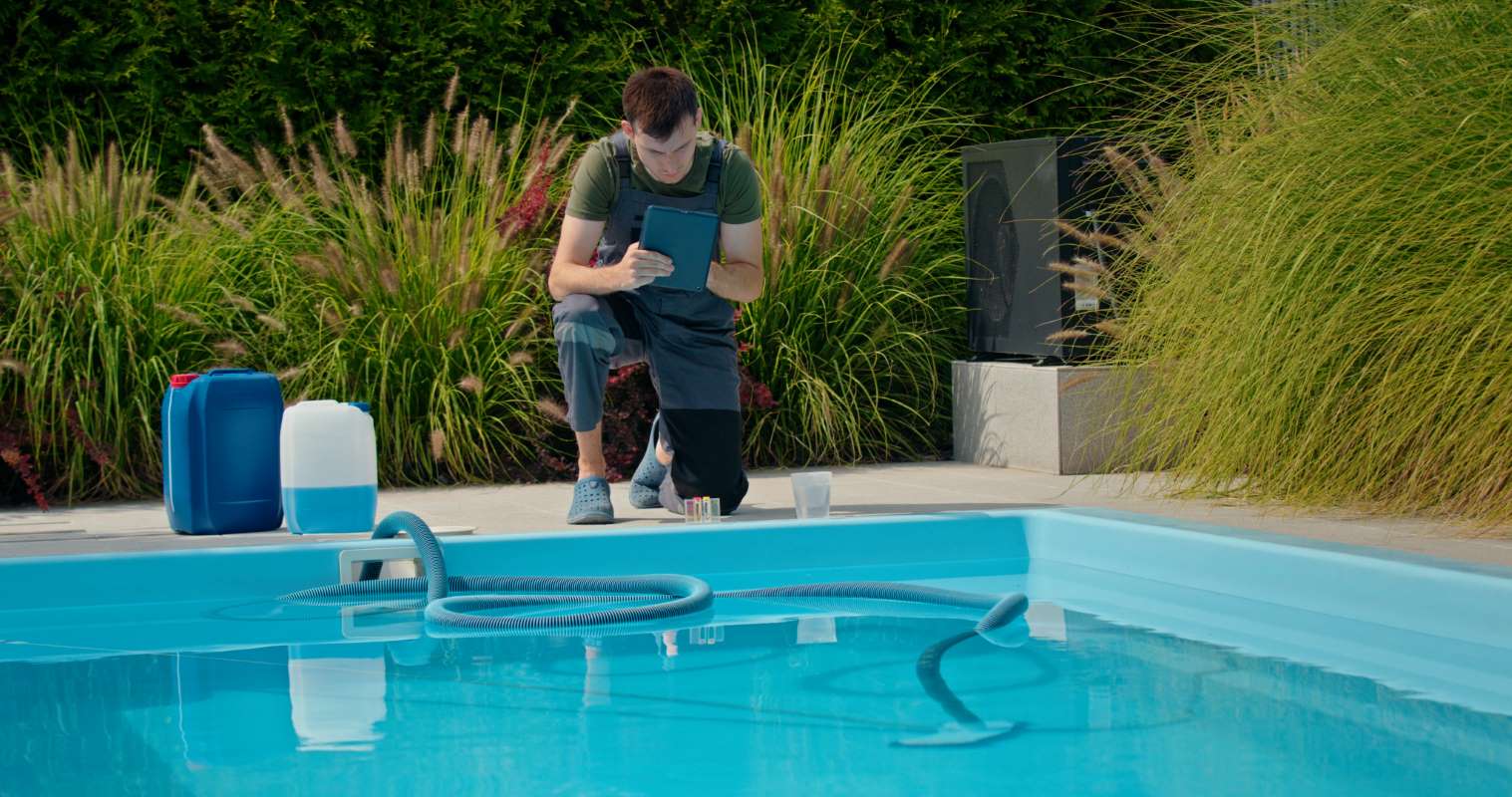
Your truck or van should be ready before your first service call. Stock it with chemicals, tools, and safety gear so you are not making supply runs in the middle of the day.
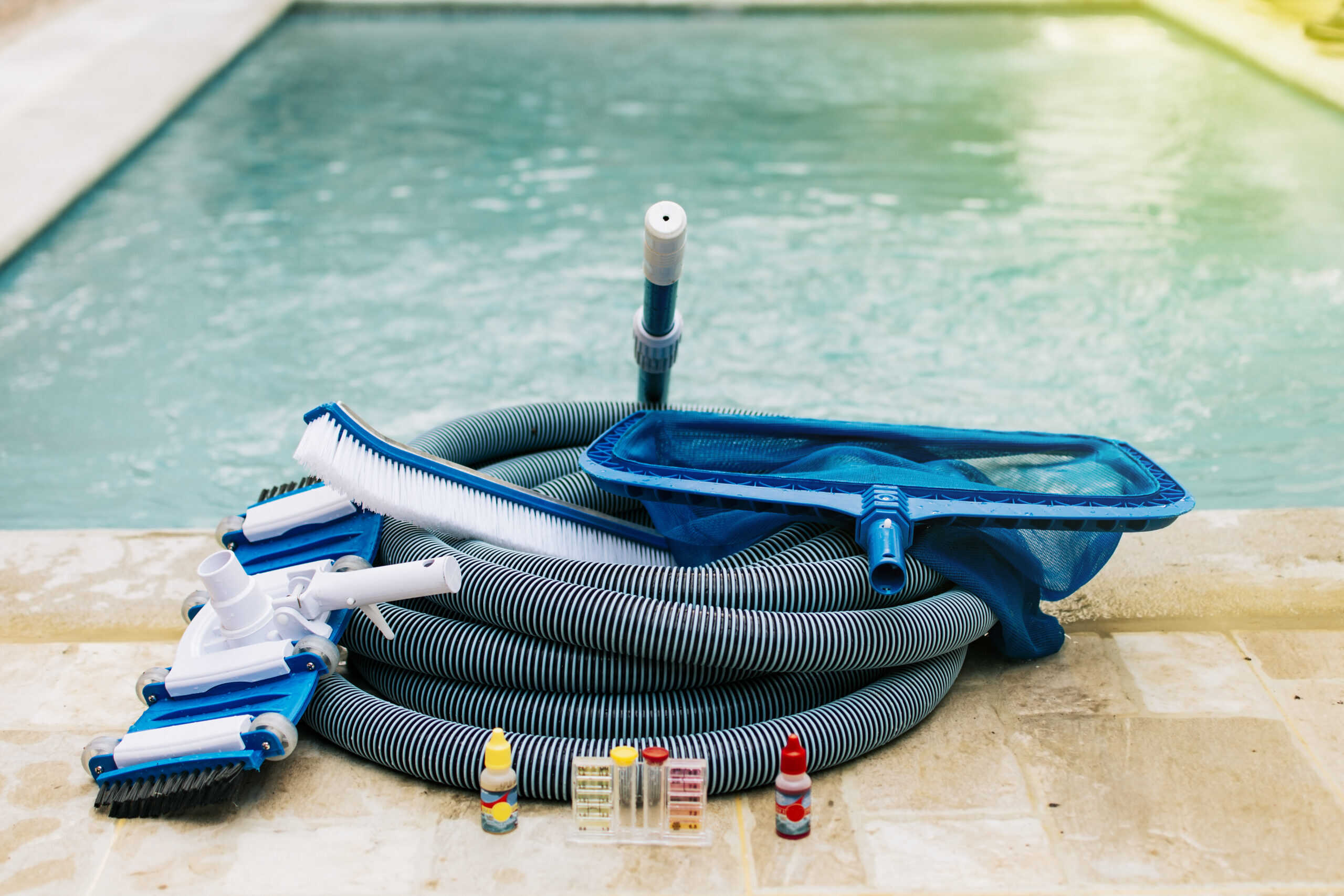
Have the basics on hand: liquid chlorine or tablets, muriatic acid, sodium bicarbonate, cyanuric acid, calcium chloride, and algaecide. Bring a professional-grade drop test kit such as a Taylor K-2006 or equivalent, plus backup test strips. Strips are useful for quick checks, but they do not replace accurate testing.
Your service tools should include a telescoping pole, leaf skimmer net, wall brush, vacuum head, vacuum hose, leaf canister or leaf bagger, and a reliable pool pump basket tool. Keep a basic repair kit in the truck too: O-rings, lubricant, Teflon tape, hose clamps, screwdrivers, pliers, and an adjustable wrench.
Safety belongs in the truck as well. Chemical-resistant gloves, safety glasses, and sunscreen are not optional. You work outdoors with caustic materials, so protect yourself from day one.
Fuel costs also deserve attention before you start. The U.S. average retail diesel price was $5.52 per gallon for the week of May 25, 2026, according to the EIA. That is a good reminder to keep your route dense and your stops grouped tightly.
Load the truck the night before your first day. That one habit removes a layer of stress when the morning already feels full.
Organize Your Route Schedule
Plan your week before you start driving. Group accounts by geography and set a clean driving order for each day. The goal is to keep the route efficient enough that you can focus on service instead of logistics.
Most full-time route owners service 12–16 pools per day across a five-day week. Your first week will not look like that. Start with fewer stops and give yourself room to learn. A lighter schedule is the right move while you are learning each property, each gate, and each equipment setup.
If you are financing the purchase, build your schedule with that monthly payment in mind from the start. A route that is well organized on paper is easier to service, easier to bill, and easier to support with business cash flow.
Review Every Account
Before you visit a pool, read everything available about it. Know the pool type, the equipment, the service day, access instructions, and any notes from the previous service history.
That information saves time on site. It also keeps you from walking into the first visit blind. The more you know before you arrive, the faster you can make smart decisions once you are there.
Week 1: Setup and First Accounts
The first week is about learning the route in real conditions. You are building muscle memory, not chasing speed.
Day 1
Your first day will take longer than any day that follows. You are seeing pools for the first time, learning the property layout, and building a workflow from scratch.
Expect to feel slow. A pool that eventually takes 15–20 minutes may take 30–40 minutes on the first visit. You are finding the gate latch, locating the equipment pad, identifying the filter, checking the water, and figuring out the order of tasks that works for you.
If the homeowner is around, introduce yourself briefly and professionally. Leave contact information. Keep the conversation short and confident. You are setting the tone for the relationship.
Document each visit as you go. Note the water chemistry, the equipment condition, the pool condition, and anything about access that you will want next time. Those notes become valuable fast.
Days 2–5
By the end of the week, the route starts to feel less foreign. You begin remembering gate codes, recognizing equipment layouts, and moving through each stop with less hesitation. Your pattern settles into a rhythm: skim, brush, vacuum if needed, empty baskets, test water, add chemicals, inspect equipment, move on.
A real-world example makes this easier to picture. A new owner may spend the first visit to a backyard pool searching for the equipment pad, checking the wrong side of the house, and re-reading notes twice before getting started. On the second visit, that same stop is faster because the owner already knows where the gate latch is, which side of the home the pad sits on, and what the filter pressure looked like last time. Nothing about the pool changed. The improvement came from memory, repetition, and a better process.
Your Week 1 goals are straightforward. Service every account at least once. Establish baseline chemistry readings. Identify any pools that need immediate attention. Learn the driving pattern between stops.
Some problems will show up quickly. Locked gates with no code happen. Note the address, contact the customer, and handle it on the next visit. Green water also happens. Do not panic. Treat the pool, brush thoroughly, and schedule a follow-up visit in 24–48 hours. That is normal corrective work, not a failure.
You may also misjudge chemical demand during the first week. That is part of the learning curve. Adjust your supply order based on what you actually use, not what you guessed you would use.
Expect long days, too. The first week often runs 9- to 10-hour days. That shrinks as you get faster.
Do not skip pools to catch up. A missed visit hurts trust faster than a late one. Finish the route and keep the schedule intact.
Week 2: Finding Your Rhythm
Week two is where the route starts to feel manageable. You already know the accounts, so the second visit is faster and calmer.
Speed Increases
Most new owners see a 30%–40% speed improvement in week two compared to week one. That improvement comes from familiarity. You know where the equipment is, which chemical you need next, and how long each stop usually takes.
Fuel still matters here, especially if your territory spreads out. The more time you spend backtracking or running supplies, the more overhead eats into the day. Dense routing protects your margin and keeps the business steadier.
The route itself also becomes easier to drive. You spend less time thinking about the path between stops and more time thinking about the work in front of you. That shift matters because the business rewards consistency, not improvisation.
Water Chemistry Stabilization
Two weeks of readings give you patterns. You start to see which pools burn through chlorine, which ones lean acidic, and which accounts tend to have recurring calcium or phosphate issues.
That is where the real advantage begins. You can pre-dose more accurately, avoid unnecessary return visits, and catch problems before they become expensive. A pool that keeps demanding more attention usually has a reason, and week two is when that reason starts to reveal itself.
Handling Customer Questions
Customers usually start reaching out once they see your work in motion. They ask about cloudy water, pump noise, filter cleaning, and other issues that show up when someone begins paying closer attention.
Answer quickly and professionally. You do not need to know everything immediately, but you do need to acknowledge the concern the same business day. If you do not know the answer, say so and follow up with a clear response.
This is where your training pays off. Technical knowledge helps, but the bigger win is staying composed when a customer wants clarity.
Week 2 Goals
By the end of week two, you should be servicing accounts within your planned time window, keeping chemistry consistent, responding to customer questions the same day, and identifying which stops are efficient and which ones need work.
Week 3: Building Customer Relationships
Week three is where the relationship side of the business starts to matter just as much as the service side. Customers stop seeing you as the new person and start seeing you as the person responsible for their pool.
Consistency Builds Trust
The strongest retention habit in pool service is simple: show up on the same day, at roughly the same time, every week. Customers notice patterns. If you service a pool every Tuesday morning, that becomes part of their routine. When you keep that rhythm, you signal reliability.
If you need to change a service day, communicate it in advance. A short text or call keeps the customer informed and prevents frustration. That kind of communication makes the business feel stable.
📌 Key Takeaway: Customer retention in pool service comes from consistency and communication. Most customers care more about reliable scheduling and clear updates than perfect chemistry every single visit.
Go Beyond the Minimum
Small details make a strong impression. Leave a service note after each visit. Flag problems early. Keep the deck area clean if it only takes a minute. Show up in a clean truck and a professional shirt.
None of that is flashy, but it builds confidence. Customers want to know their pool is in good hands, and the details tell them exactly that.
Handling Your First Complaint
Every route owner gets a complaint. Water looks off. A visit was missed. A customer smells chemicals and wants an explanation. What matters is how you respond.
Listen without getting defensive. Acknowledge the concern. Fix the issue as quickly as possible. Then follow up to make sure the customer is satisfied.
A well-handled complaint can strengthen the relationship. It shows the customer that you take the route seriously and that you will respond when something needs attention.
Week 3 Goals
Your goals now are simple: no missed visits, proactive communication, at least one customer concern handled well, and a clearer understanding of your average time per pool and per day.
Week 4: Optimization
By week four, the route should feel less like a test and more like a business. Now you start tightening the numbers.
Route Efficiency
Look for wasted time in the daily route. Backtracking, unnecessary supply runs, and inefficient stop order all slow you down.
Reorder stops to reduce drive time. Even small time savings matter over a year. Identify the accounts that consistently take longer than expected and figure out why. Sometimes the issue is the pool. Sometimes it is your process. Batch supply runs so you are not breaking the day apart with extra errands.
Use a GPS tracking app during week four if needed. Real driving data often shows easy improvements. A few stop changes can make the day noticeably smoother.
Financial Tracking
If you have not already, start tracking revenue, expenses, time, and per-account profitability. You need to know what each account brings in and what it costs to service.
That matters because not every stop has the same value. An account that pays less, takes longer, and sits far from the rest of the route may be harder to justify than one that is compact and efficient. When you track the numbers, you can make better decisions about how to grow.
Fuel prices make that tracking even more important. The EIA’s May 25, 2026 diesel report gives operators a simple reminder: routing discipline protects margin. Dense routes absorb fuel swings better than scattered schedules.
A small-business loan can support that discipline too, especially when it helps you protect working capital for chemicals, equipment, and the first months of operations. The point is not to stretch the business thin. The point is to give the route room to perform.
Chemical Cost Optimization
Chemicals are one of your largest recurring expenses after fuel. Week four is the right time to tighten that part of the business.
Buy in bulk when it makes sense. Pre-measure doses when that saves time. Fix the root cause when a pool burns through chemicals too quickly. A pool with poor water balance will keep consuming product until you address the reason behind the imbalance.
That approach saves money and reduces repeat work.
Planning for Growth
By the end of your first month, you will know your capacity better than you did at the start. You will know how many more accounts you can handle, whether you need more time to stabilize, and whether add-on services could improve revenue per stop.
If you are ready to grow, contact Superior Pool Routes about adding to your route. We can load additional accounts into your territory as you expand. Visit Pool Routes for Sale to see what is available.
Month-End Checklist
By day 30, you should be able to check off most of the basics. Your accounts should be serviced on a consistent schedule. Water chemistry should be stable. Customer contact information should be organized. Financial tracking should be in place. Your chemical supply chain should be working. Your vehicle and equipment should be in good shape. You should have at least a basic rapport with every customer, and your route should be more efficient than it was on day 1.
If you are missing a few of those items, that is normal. Some owners need 45–60 days to hit full stride. The goal is steady progress, not perfection in the first month.
Tips for Long-Term Success
Never stop learning. Water chemistry, equipment, and service methods all keep evolving, and the owners who keep learning stay sharp.
Protect your warranty. Superior Pool Routes provides a warranty on your accounts, and quality service helps you make the most of it.
Communicate proactively. Customers who feel informed are easier to retain than customers who have to chase updates.
Take care of yourself, too. Pool service is physical outdoor work. Stay hydrated, wear sunscreen, lift properly, and keep your energy up. Your body is part of the business.
You Are Ready
The first 30 days are the hardest stretch of owning a pool route. After that, the work becomes familiar, the relationships deepen, and the business starts feeling like your own. The learning curve is real, but it is temporary. With consistency, clear communication, and good route habits, the month ends with a stronger business and a clearer path forward.
Questions about getting started? Call Superior Pool Routes at 800-249-6973 or visit our Contact page. Check our FAQ page for detailed answers, and explore our Training program to see how we prepare you from day one.
Results vary based on market, account count, and individual effort. Pricing may vary.